

Technology is changing rapidly, and businesses are processing more data than ever before. From smart devices and connected machines to artificial intelligence and real-time applications, organizations need reliable computing infrastructure that can handle large amounts of information efficiently.Two technologies playing a major role in modern computing are edge computing and cloud computing. While both help businesses process, store, and manage data, they work in very different ways.
Understanding edge computing vs cloud computing is important for businesses that want to improve application performance, reduce latency, strengthen data management, and control infrastructure costs. In some cases, organizations may choose one approach, while others use a combination of both.
What Is Cloud Computing?
Cloud computing is a technology that allows users and businesses to access computing resources over the internet instead of relying entirely on local hardware.These resources can include servers, databases, storage, networking, software, analytics tools, and processing power. Cloud providers maintain large data centers where computing resources are hosted and made available to customers when needed.
Popular cloud computing models include Infrastructure as a Service (IaaS), Platform as a Service (PaaS), and Software as a Service (SaaS).Instead of purchasing and maintaining expensive physical servers, businesses can rent cloud resources and scale them according to their requirements.
How Does Cloud Computing Work?
In a traditional cloud environment, data is collected from users, applications, or connected devices and sent through the internet to centralized cloud servers. The cloud infrastructure processes the data and sends the required results back to the user or application.when you use an online storage service, your files may be stored in a remote data center rather than on your personal computer.Cloud computing is particularly useful for applications that require significant storage, centralized management, collaboration, and large-scale data processing.
What Is Edge Computing?
Edge computing is a distributed computing approach that processes data closer to where it is generated rather than sending all data to a centralized cloud or data center.The “edge” refers to locations close to users, devices, sensors, machines, and other data sources. Edge devices or local computing systems can analyze and process information locally before sending selected data to a central server or cloud platform.
This approach can significantly reduce the distance data needs to travel.a smart factory may use edge computers to analyze information from industrial machines locally. Instead of sending every sensor reading to the cloud, the edge system can identify problems immediately and only send important information to a central platform.
How Does Edge Computing Work?
Edge computing places computing resources near the source of data.A typical edge computing system may include sensors, IoT devices, gateways, local servers, routers, or specialized edge computers. These systems collect and process data locally.
Some information can be analyzed immediately, while other data may be sent to a cloud environment for long-term storage, advanced analytics, or centralized management.This architecture is particularly valuable when applications require fast response times or operate in locations where internet connectivity may be limited.
Edge Computing vs Cloud Computing: Key Differences
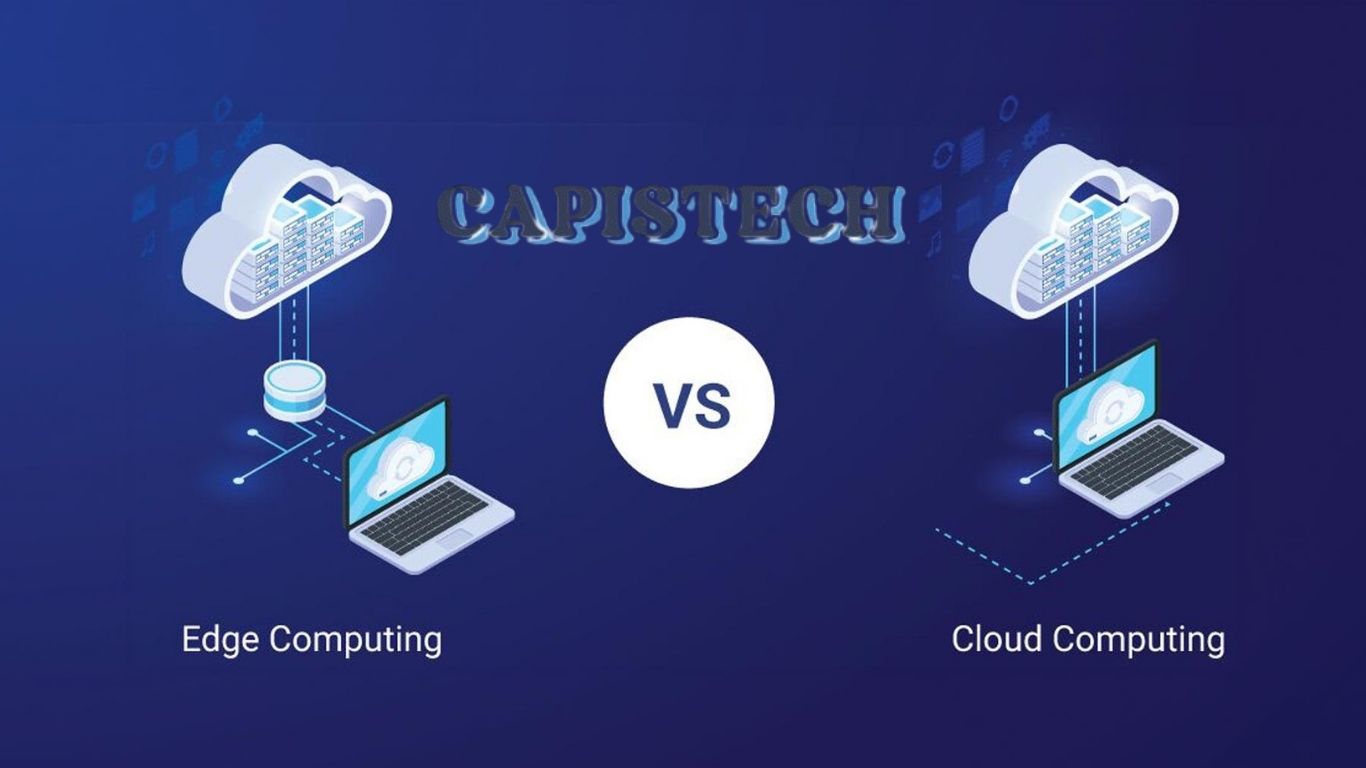
The biggest difference between edge computing and cloud computing is where data processing occurs.Cloud computing generally processes data in centralized data centers, while edge computing processes data closer to its source.
Here are some of the most important differences:
Data Processing Location
- Cloud computing relies primarily on centralized servers located in remote data centers.
- Edge computing moves processing closer to users, devices, and data sources.
Latency
- Latency refers to the time required for data to travel between a device and a computing system.
- Cloud computing can experience higher latency when data must travel long distances to a remote data center. Edge computing can reduce latency by processing information locally.
Internet Dependency
- Cloud computing generally depends heavily on reliable internet connectivity.
- Edge computing can continue processing certain workloads locally even when connectivity is slow or temporarily unavailable.
Scalability
Cloud platforms can provide extremely scalable computing and storage resources because businesses can increase or decrease resources according to demand.
Edge computing can also scale, but organizations may need to deploy and manage additional edge devices or local infrastructure.
Data Management
Cloud computing provides centralized data management, making it easier for organizations to store and analyze large datasets in one environment.
Edge computing processes information closer to its source, which can reduce the amount of raw data that needs to be transmitted to the cloud.
Cost Structure
Cloud computing typically uses subscription, usage-based, or resource-based pricing models. Businesses avoid many upfront hardware costs.
Edge computing may require investment in local hardware, networking equipment, maintenance, and security infrastructure.
However, edge computing can reduce bandwidth costs by preventing unnecessary data from being transmitted to the cloud.
Benefits of Cloud Computing
Cloud computing has become popular because it provides organizations with flexible and scalable computing resources.
Scalability
Businesses can quickly increase or decrease computing resources according to demand. This is especially useful for websites and applications that experience unpredictable traffic.
Lower Hardware Requirements
Organizations do not necessarily need to purchase and maintain large physical data centers. Cloud providers manage much of the underlying infrastructure.
Centralized Management
Cloud environments make it easier to manage applications, databases, files, and analytics from centralized platforms.
Remote Accessibility
Employees and customers can access cloud-based applications and services from different locations as long as they have appropriate internet access.
Advanced Computing Resources
Cloud platforms can provide access to powerful computing resources for artificial intelligence, machine learning, big data analytics, and other demanding workloads.
Disadvantages of Cloud Computing
Despite its advantages, cloud computing has some limitations.One major concern is latency. Applications that require immediate responses may not perform optimally when every request must travel to a distant cloud server.
Cloud computing also depends heavily on internet connectivity. Network outages or poor connections can affect cloud-based applications.Data privacy and security are additional considerations. Organizations must carefully configure access controls, encryption, authentication, and security policies to protect sensitive information.Cloud costs can also increase when businesses process or transfer very large amounts of data.
Benefits of Edge Computing
Edge computing provides several advantages for modern applications.
Lower Latency
Processing data near its source can significantly reduce response times. This is particularly important for applications where milliseconds can matter.
Faster Real-Time Processing
Edge systems can analyze data locally and respond quickly. This makes edge computing suitable for autonomous machines, industrial automation, smart infrastructure, and real-time monitoring.
Reduced Bandwidth Usage
Instead of sending all collected data to a cloud server, edge systems can filter and process information locally. Only important or summarized data needs to be transferred.
Improved Reliability
Applications can continue performing certain functions locally even when connectivity to a centralized cloud environment is interrupted.
Better Support for IoT
The Internet of Things generates enormous amounts of data. Edge computing can help IoT systems process information efficiently without constantly transmitting raw data to the cloud.
Disadvantages of Edge Computing
Edge computing also introduces challenges.Organizations may need to deploy computing hardware at multiple locations. Managing hundreds or thousands of distributed devices can be more complicated than managing a centralized cloud environment.Security is another important concern. Edge devices may be installed in physically accessible or remote locations, increasing the number of potential security targets.
Hardware maintenance, software updates, monitoring, and device management can also require additional resources.Furthermore, edge devices may have fewer computing resources than centralized cloud data centers, making them less suitable for extremely demanding workloads.
Edge Computing Use Cases
Edge computing is particularly useful for applications that require fast processing and low latency.
Internet of Things
Smart sensors and connected devices can analyze information locally instead of sending every data point to the cloud.
Smart Cities
Traffic systems, surveillance infrastructure, environmental sensors, and public services can use edge computing to process information in real time.
Healthcare
Medical devices can process certain information locally, helping healthcare systems respond quickly to important events.
Autonomous Vehicles
Self-driving and connected vehicles require extremely fast decision-making. Processing information closer to the vehicle can reduce communication delays.
Manufacturing
Factories can use edge computing for machine monitoring, predictive maintenance, quality control, and industrial automation.
Retail
Smart stores can use edge systems for inventory monitoring, customer analytics, checkout systems, and security applications.
Cloud Computing Use Cases
Cloud computing remains ideal for many large-scale and centralized workloads.
Data Storage
Businesses can store large amounts of documents, backups, databases, and other information in cloud environments.
Web Applications
Many websites and online applications use cloud infrastructure to deliver services to customers around the world.
Software Development
Developers can use cloud platforms to build, test, deploy, and manage applications without maintaining their own physical servers.
Big Data Analytics
Cloud infrastructure can provide the processing power required to analyze large datasets.
Artificial Intelligence
Organizations can use cloud computing resources to train and deploy machine learning and artificial intelligence models that require significant computing power.
Edge Computing and Cloud Computing: Which Is Better?
- There is no universal answer to which technology is better.
- The right choice depends on the application’s requirements.
- Cloud computing may be the better option when an organization needs centralized storage, massive processing capacity, easy scalability, and remote access.
- Edge computing may be better when applications require low latency, real-time decision-making, local processing, or reduced bandwidth consumption.
- In many modern environments, however, businesses do not need to choose only one.
Edge and Cloud Computing Working Together
One of the most effective approaches is to combine edge computing with cloud computing.In a hybrid architecture, edge devices can process time-sensitive information locally while the cloud handles centralized storage, advanced analytics, machine learning, backups, and long-term data management.
For example, a smart factory could use edge computers to monitor machines and detect unusual behavior immediately. The system could then send selected information to the cloud for deeper analysis and historical reporting.This approach provides the speed of edge computing along with the scalability and capabilities of cloud computing.
Edge Computing vs Cloud Computing for Businesses
Businesses should consider several factors before selecting a computing architecture.First, identify how quickly applications need to respond. If real-time processing is essential, edge computing may provide significant advantages.Second, consider the amount of data being generated. Organizations processing huge volumes of IoT data may benefit from local processing to reduce bandwidth requirements.
Third, evaluate security and compliance requirements. Sensitive information may require carefully designed data-processing policies.Finally, consider infrastructure and management costs. Cloud computing can reduce hardware responsibilities, while edge computing may require more distributed infrastructure.
The Future of Edge and Cloud Computing
The future of computing is likely to involve greater cooperation between edge and cloud technologies.As IoT devices, artificial intelligence, robotics, smart cities, autonomous systems, and connected infrastructure continue to grow, organizations will need computing systems capable of processing data quickly and efficiently.
Edge computing can handle time-sensitive workloads close to users and devices, while cloud platforms can provide centralized management and powerful analytics.Emerging technologies such as 5G, AI, machine learning, and advanced IoT systems are expected to further increase the importance of distributed computing.
Frequently Asked Questions
What is the difference between edge computing and cloud computing?
Edge computing processes data closer to where it is generated, while cloud computing processes data mainly in centralized remote data centers. Edge computing generally provides lower latency, while cloud computing offers greater centralized scalability.
Is edge computing faster than cloud computing?
Yes, edge computing can be faster for real-time applications because data is processed closer to the source. This reduces the time required to send data to a remote cloud server and receive a response.
What are the main benefits of cloud computing?
The main benefits of cloud computing include scalability, flexible storage, centralized management, remote accessibility, lower hardware requirements, and access to powerful computing resources.
What are the advantages of edge computing?
Edge computing offers lower latency, faster real-time processing, reduced bandwidth usage, improved reliability, and efficient support for Internet of Things (IoT) devices.
Is edge computing more secure than cloud computing?
Neither technology is automatically more secure. Edge computing can reduce the need to transmit sensitive data, while cloud platforms often provide advanced security tools. Proper authentication, encryption, monitoring, and access controls are essential for both.
Can edge computing and cloud computing work together?
Yes. Edge computing and cloud computing can work together in a hybrid architecture. Edge devices can handle real-time processing locally, while the cloud manages storage, advanced analytics, backups, and centralized operations.
Conclusion
Understanding edge computing vs cloud computing is essential for businesses adopting modern digital technologies. Cloud computing provides scalability, centralized storage, powerful processing, and flexible resource management, while edge computing delivers faster response times, lower latency, and efficient local data processing.
Neither technology is universally better. The right choice depends on factors such as application requirements, data volume, connectivity, security, and real-time processing needs. In many cases, combining edge and cloud computing offers the best solution by providing both local speed and centralized cloud capabilities.
